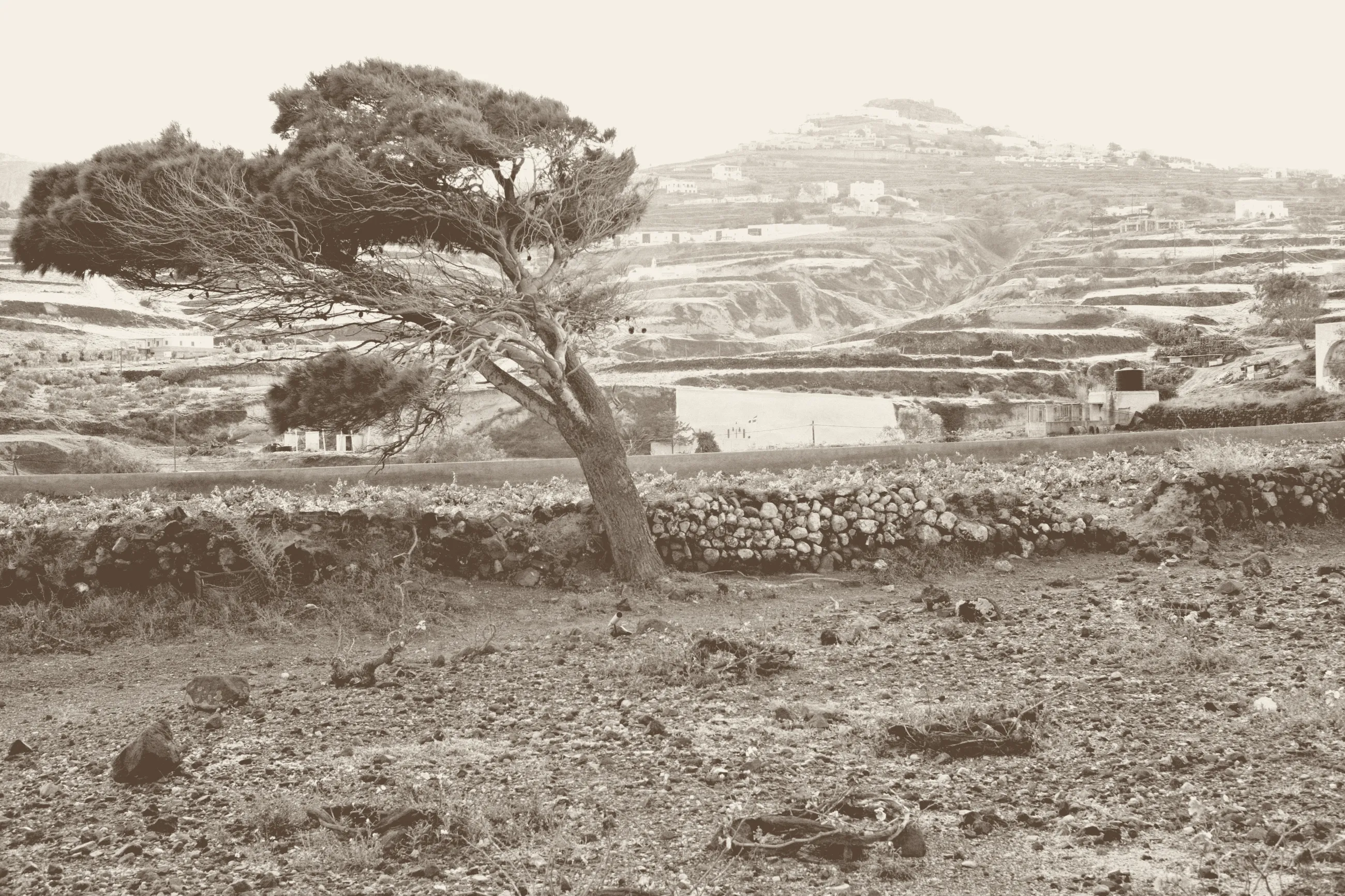
The Canava
Carved into stone.
The traditional cave winery of Santorini, where we make our wine.
Enter the canava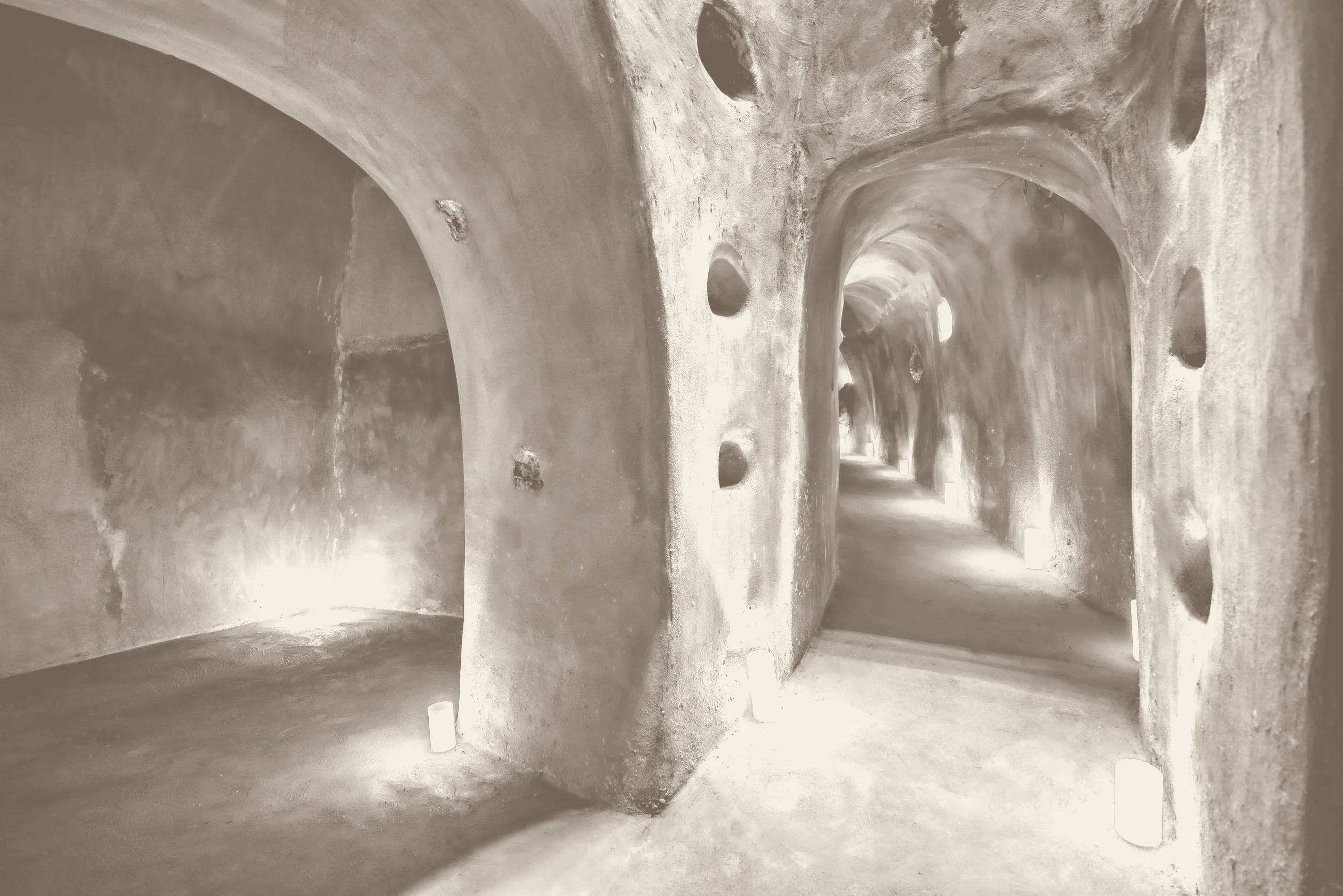
Plate IIThe passages of the canava · Messaria
A traditional Santorini canava
A canava is a traditional Santorini winery, carved into the volcanic hillside. Ours was built in the nineteenth century, and we make our wine in it today.
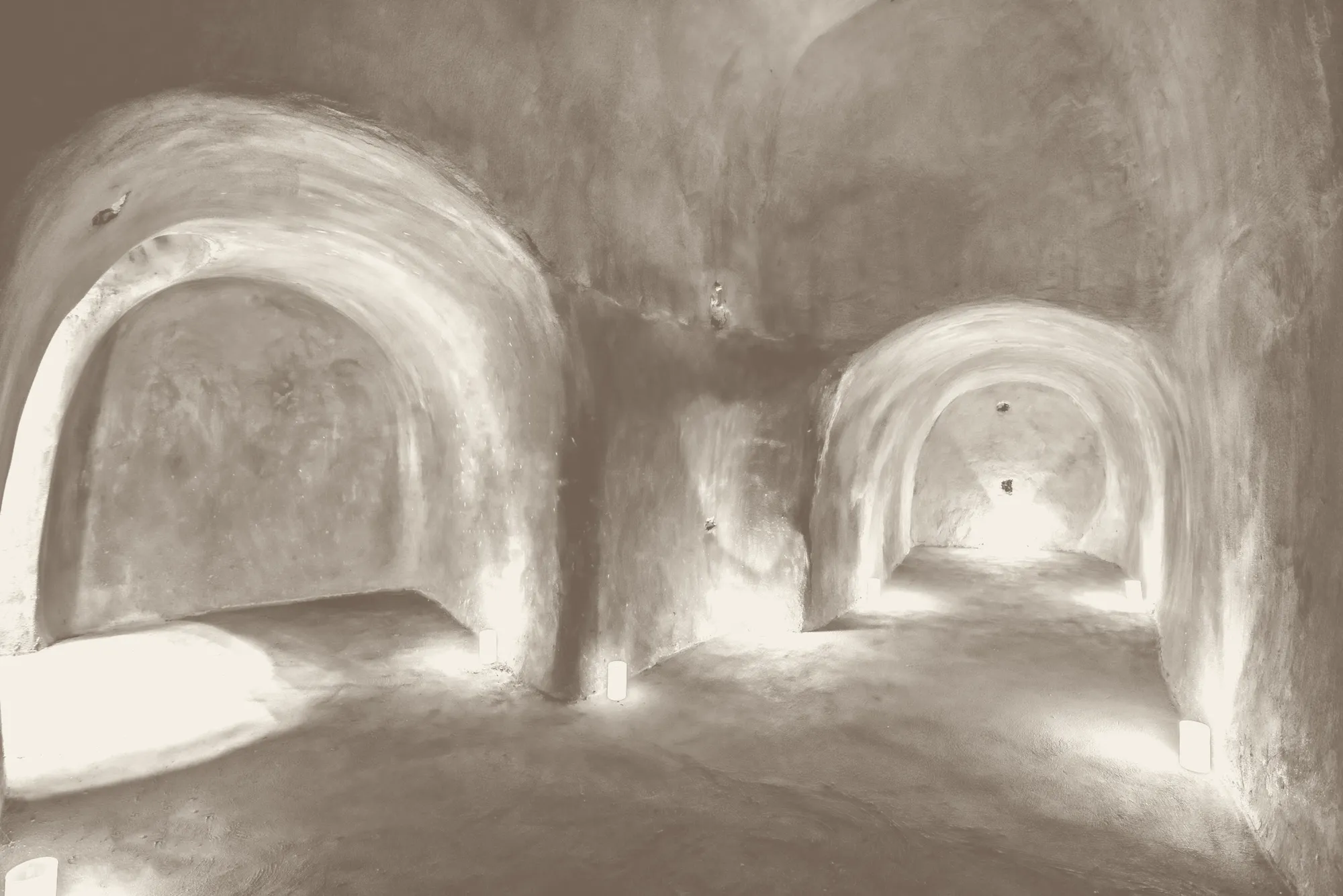
01 · Within the stone
The canava
The winery is the upper cave. We press whole clusters, ferment slowly at the cave's own temperature, and do as little to the wine as the fruit allows.
02 · Within the stone
Our winemaking
We harvest by hand from vines trained in kouloura, the low basket that shelters the fruit from the wind. We use native yeasts where we can, allow long contact with the lees, and blend by taste.
The method
Grape to bottle
- 01HarvestPicked by hand from kouloura vines
- 02FermentationNative yeasts where we can
- 03CellarThe cave's own temperature, all year
- 04AgeingLong on the lees
- 05BlendingBlended by taste
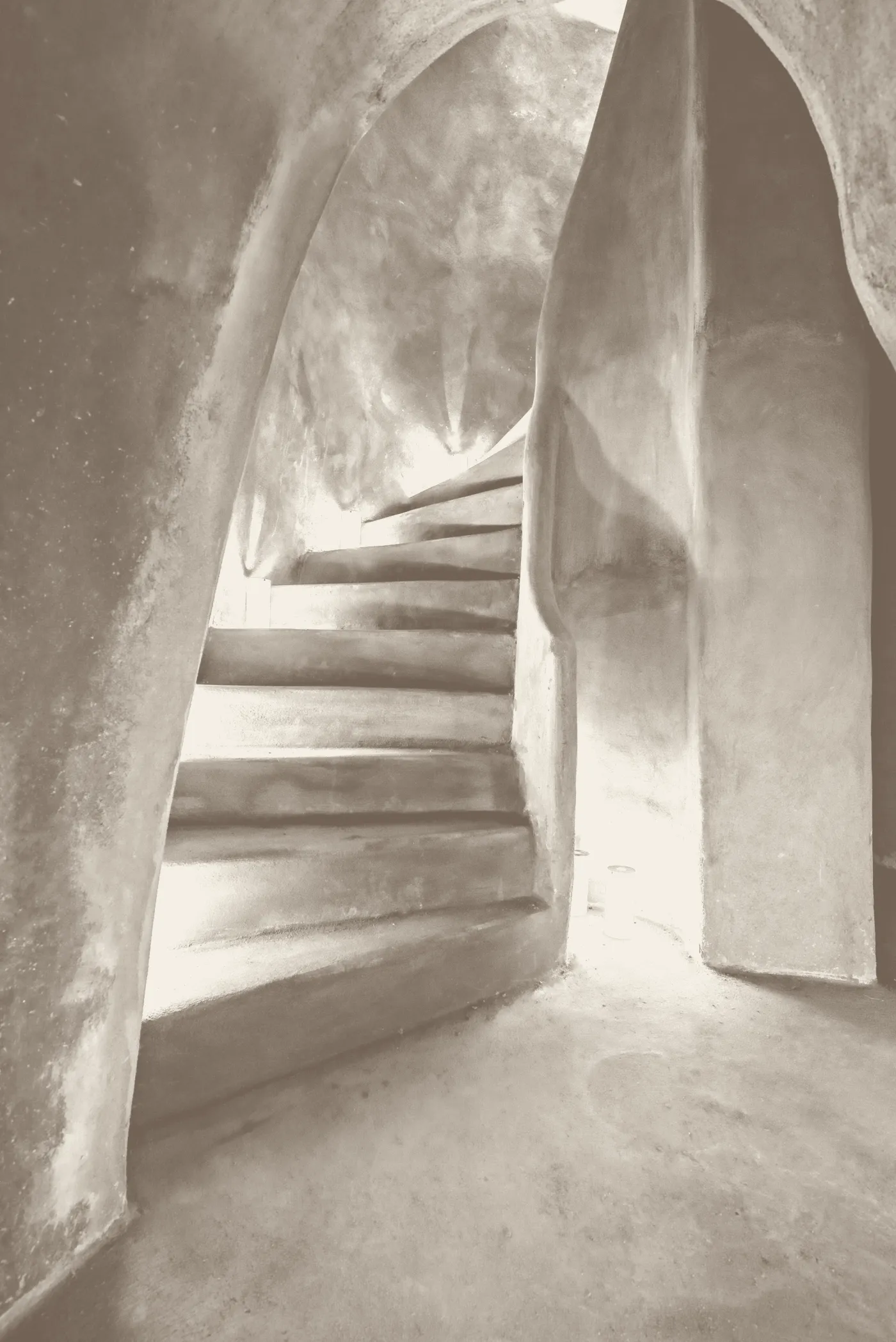
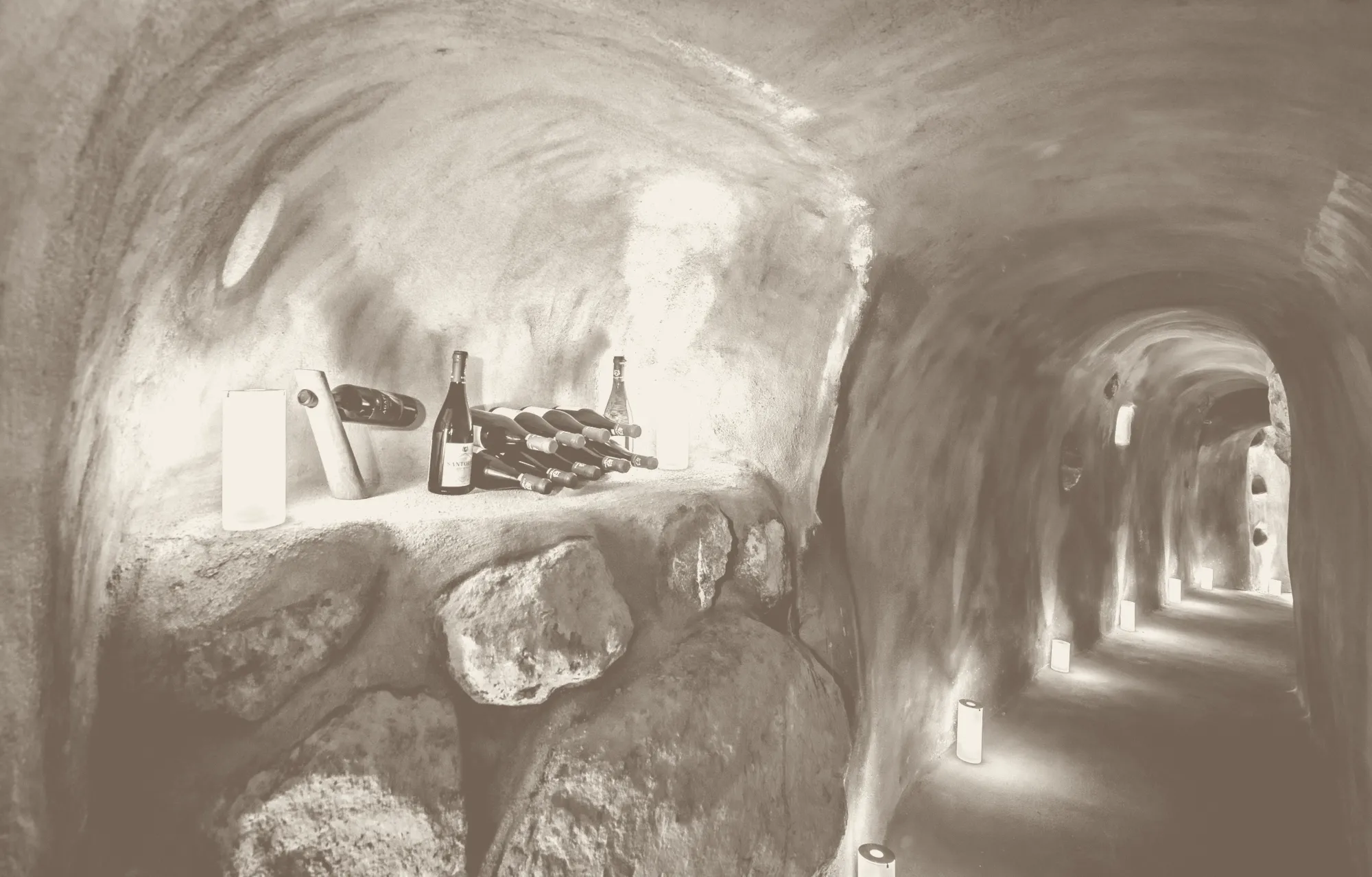
03 · Within the stone
The cellar
A stair leads down to the cellar. The wines age there, in the cool of the stone.
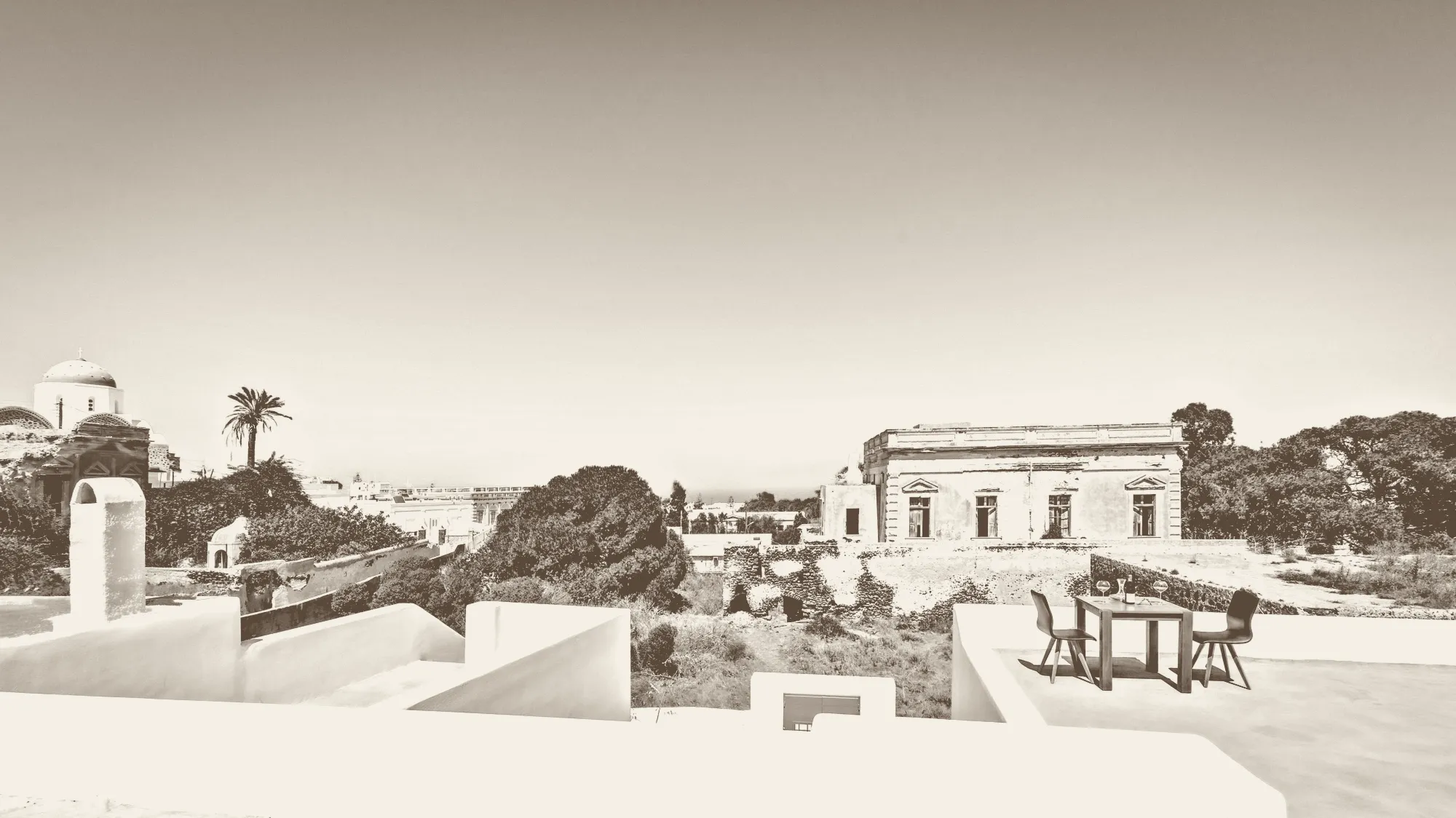
04 · Within the stone
The terrace
Above the cellar is a terrace that looks over the village.